
The last test
The last test from Joseph for his brothers is recounted in Genesis 44, starting with verse 1:
And he commanded the steward of his house, saying, “Fill the men’s sacks with food, as much as they can carry, and put each man’s money in the mouth of his sack. 2 Also put my cup, the silver cup, in the mouth of the sack of the youngest, and his grain money.” So he did according to the word that Joseph had spoken. 3 As soon as the morning dawned, the men were sent away, they and their donkeys. 4 When they had gone out of the city, and were not yet far off, Joseph said to his steward, “Get up, follow the men; and when you overtake them, say to them, ‘Why have you repaid evil for good? 5 Is not this the one from which my lord drinks, and with which he indeed practices divination? You have done evil in so doing.’ ”
6 So he overtook them, and he spoke to them these same words. 7 And they said to him, “Why does my lord say these words? Far be it from us that your servants should do such a thing. 8 Look, we brought back to you from the land of Canaan the money which we found in the mouth of our sacks. How then could we steal silver or gold from your lord’s house? 9 With whomever of your servants it is found, let him die, and we also will be my lord’s slaves.”
10 And he said, “Now also let it be according to your words; he with whom it is found shall be my slave, and you shall be blameless.” Genesis 44.1-10
So, they go back and they empty their sacks, and they search them. And they find the cup is in Benjamin’s sack.
What’s going to happen now? They have made all these promises to Jacob that they’re going to bring Benjamin back and they won’t be able to do it.
On one level, they could say, ‘Well, tough! It shouldn’t have happened like this. But it did. We’ll just have to go back to our father and say that Benjamin’s not with us anymore‘
In which case, they be rid of the two favourite sons and perhaps their father would take more notice of them. But, of course, it might even kill Jacob to hear this news. In which case that would be it. And Jacob said he would go down to his grave in sorrow if Benjamin didn’t come back.
38 But he said, “My son shall not go down with you, for his brother is dead, and he is left alone. If any calamity should befall him along the way in which you go, then you would bring down my gray hair with sorrow to the grave.” Genesis 42.38
Now Judah said he would look after Benjamin and make sure that he came back. But let’s see what happens. The next verse reads,
14 So Judah and his brothers came to Joseph’s house, and he was still there; and they fell before him on the ground. 15 And Joseph said to them, “What deed is this you have done? Did you not know that such a man as I can certainly practice divination?”
16 Then Judah said, “What shall we say to my lord? What shall we speak? Or how shall we clear ourselves? God has found out the iniquity of your servants; here we are, my lord’s slaves, both we and he also with whom the cup was found.”
17 But he said, “Far be it from me that I should do so; the man in whose hand the cup was found, he shall be my slave. And as for you, go up in peace to your father.”
18 Then Judah came near to him and said: “O my lord, please let your servant speak a word in my lord’s hearing, and do not let your anger burn against your servant; for you are even like Pharaoh. 19 My lord asked his servants, saying, ‘Have you a father or a brother?’ 20 And we said to my lord, ‘We have a father, an old man, and a child of his old age, who is young; his brother is dead, and he alone is left of his mother’s children, and his father loves him.’ 21 Then you said to your servants, ‘Bring him down to me, that I may set my eyes on him.’ 22 And we said to my lord, ‘The lad cannot leave his father, for if he should leave his father, his father would die.’ 23 But you said to your servants, ‘Unless your youngest brother comes down with you, you shall see my face no more.’
24 “So it was, when we went up to your servant my father, that we told him the words of my lord. 25 And our father said, ‘Go back and buy us a little food.’ 26 But we said, ‘We cannot go down; if our youngest brother is with us, then we will go down; for we may not see the man’s face unless our youngest brother is with us.’ 27 Then your servant my father said to us, ‘You know that my wife bore me two sons; 28 and the one went out from me, and I said, “Surely he is torn to pieces”; and I have not seen him since. 29 But if you take this one also from me, and calamity befalls him, you shall bring down my gray hair with sorrow to the grave.’
30 “Now therefore, when I come to your servant my father, and the lad is not with us, since his life is bound up in the lad’s life, 31 it will happen, when he sees that the lad is not with us, that he will die. So your servants will bring down the gray hair of your servant our father with sorrow to the grave. 32 For your servant became surety for the lad to my father, saying, ‘If I do not bring him back to you, then I shall bear the blame before my father forever.’ 33 Now therefore, please let your servant remain instead of the lad as a slave to my lord, and let the lad go up with his brothers. 34 For how shall I go up to my father if the lad is not with me, lest perhaps I see the evil that would come upon my father?” Genesis 44.14-34
What a change has come over Judah! Judah is now saying. ‘I’ll take the place of Benjamin‘. In fact, he’s being a bit like the Messiah here. He’s saying, ‘I’ll take his place‘, the place of Benjamin and he can go free. Remember in 1 John 3 it says,
16 By this we know love, because He laid down His life for us. And we also ought to lay down our lives for the brethren. 1 John 3.16
Judah is willing to lay down his life now for his brother and for his father’s sake. And you can see that there’s this change now. Not just in thought and in word, but in deed. He’s now saying, ‘I’m willing to sacrifice myself in order that Benjamin may be free and go back to the father, and that the father, Jacob, will not be so brought down with grief as he was when he heard of the news of Joseph’s death‘.
So you’ve had all these tests and now Joseph recognizes that there truly has been a change in their minds and, as a result of this, they can be reconciled.
The awesome Grace the Lord’s forgiveness
And the next few verses are, I think, some of the most moving verses you can read in the Bible, and it is hard to read them without crying yourself. But, let’s read them. Chapter 45,
Then Joseph could not restrain himself before all those who stood by him, and he cried out, “Make everyone go out from me!” So no one stood with him while Joseph made himself known to his brothers. 2 And he wept aloud, and the Egyptians and the house of Pharaoh heard it.
3 Then Joseph said to his brothers, “I am Joseph; does my father still live?” But his brothers could not answer him, for they were dismayed in his presence. 4 And Joseph said to his brothers, “Please come near to me.” So they came near. Then he said: “I am Joseph your brother, whom you sold into Egypt. 5 But now, do not therefore be grieved or angry with yourselves because you sold me here; for God sent me before you to preserve life. 6 For these two years the famine has been in the land, and there are still five years in which there will be neither ploughing nor harvesting. 7 And God sent me before you to preserve a posterity for you in the earth, and to save your lives by a great deliverance. 8 So now it was not you who sent me here, but God; and He has made me a father to Pharaoh, and lord of all his house, and a ruler throughout all the land of Egypt.
9 “Hurry and go up to my father, and say to him, ‘Thus says your son Joseph: “God has made me lord of all Egypt; come down to me, do not tarry. Genesis 45.1-9
Wow! Can you imagine what the brothers thought when they heard that? They must have been totally – well, what do what can you say? – amazed, gobsmacked, whatever… totally, it says ‘they were terrified’. Actually, it says that they couldn’t answer for they were dismayed in his presence.
The word implies they were were terrified. Suddenly, they realize who they’re standing before. They’re standing before the one whom they had sold into slavery, whom they thought was now going to be just either dead or in some very lowly and menial position.
23 So it came to pass, when Joseph had come to his brothers, that they stripped Joseph of his tunic, the tunic of many colours that was on him. 24 Then they took him and cast him into a pit. And the pit was empty; there was no water in it.
25 And they sat down to eat a meal. Then they lifted their eyes and looked, and there was a company of Ishmaelites, coming from Gilead with their camels, bearing spices, balm, and myrrh, on their way to carry them down to Egypt. 26 So Judah said to his brothers, “What profit is there if we kill our brother and conceal his blood? 27 Come and let us sell him to the Ishmaelites, and let not our hand be upon him, for he is our brother and our flesh.” And his brothers listened. 28 Then Midianite traders passed by; so the brothers pulled Joseph up and lifted him out of the pit, and sold him to the Ishmaelites for twenty shekels of silver. And they took Joseph to Egypt. Genesis 37.23-28
Yet now they find him standing before them as the second Lord of Egypt, the one who’s able to give them bread to live on and who tells them that it was God who sent him down there, because God sent him there in order to preserve life, to preserve their lives, so that they would stay alive in the time of famine, and continue to have children themselves, continue as the children of Israel.
It was all God overruling and provide a posterity in the earth to fulfil His promise to Abraham to give him a multitude of descendants.
9 “Hurry and go up to my father, and say to him, ‘Thus says your son Joseph: “God has made me lord of all Egypt; come down to me, do not tarry. 10 You shall dwell in the land of Goshen, and you shall be near to me, you and your children, your children’s children, your flocks and your herds, and all that you have. 11 There I will provide for you, lest you and your household, and all that you have, come to poverty; for there are still five years of famine.” ’
12 “And behold, your eyes and the eyes of my brother Benjamin see that it is my mouth that speaks to you. 13 So you shall tell my father of all my glory in Egypt, and of all that you have seen; and you shall hurry and bring my father down here.”
14 Then he fell on his brother Benjamin’s neck and wept, and Benjamin wept on his neck. 15 Moreover he kissed all his brothers and wept over them, and after that his brothers talked with him. Genesis 45.9-14
Joseph tells his brothers to hurry back to Jacob and tell Jacob what they’ve seen, that Joseph is the Lord of Egypt, and he says he is going to give them a place to dwell in in the land of Goshen, a fertile region in the northeast of Egypt. And he weeps and kisses his brothers and is fully reconciled to them.
Remember I said, this is a story not just about repentance but also about reconciliation and what you can see when you look at this in the light of the New Testament is that there’s a theme which ties in with what Jesus taught in relation to sin, repentance, and reconciliation. Because the brothers who committed a grave sin against Joseph had this on their conscience for all these years. For some 20 years, they’d have this on their consciences and the recognition of this comes out when they say
18 Then Joseph said to them the third day, “Do this and live, for I fear God: 19 If you are honest men, let one of your brothers be confined to your prison house; but you, go and carry grain for the famine of your houses. 20 And bring your youngest brother to me; so your words will be verified, and you shall not die.”
And they did so. 21 Then they said to one another, “We are truly guilty concerning our brother, for we saw the anguish of his soul when he pleaded with us, and we would not hear; therefore this distress has come upon us.” Genesis 42.18-21
So Joseph wants to see a change of heart in them before he reveals himself to them. He arranges these tests in which they have to choose between acting in a selfish, heartless way and being self-sacrificing. And Judah goes from being the most cruel and the most heartless to the most self-sacrificing. He acts on his word when it turns out that Benjamin is in trouble, and he offers to take his place in chapter 44. And, at this point, Joseph reveals himself to them.
There is a principle here of forgiveness and reconciliation. Now, Joseph could forgive them knowing that God meant it for good. Jesus’ teaching is forgive us our trespasses as we forgive those who trespass against us. So, we forgive those who trespass against us but we are not necessarily reconciled to those who trespass against us.
Sometimes, when there’s a terrorist act, some people, some Christians stand up and say, ‘Well, I forgive the people who did this‘. Okay, that’s all right. It’s better than wanting revenge on them.

But, you can’t be reconciled with them unless the person who has done it repents and wants to be reconciled with you. You see the point there. And that’s what this story is about. Not just that they should be forgiven, but that they should be reconciled.
For them to be reconciled, they have to acknowledge the sin which they’ve committed in the past and put it right; then become reconciled to their brother to Joseph.
12 For we do not commend ourselves again to you, but give you opportunity to boast on our behalf, that you may have an answer for those who boast in appearance and not in heart. 13 For if we are beside ourselves, it is for God; or if we are of sound mind, it is for you. 14 For the love of Christ compels us, because we judge thus: that if One died for all, then all died; 15 and He died for all, that those who live should live no longer for themselves, but for Him who died for them and rose again.
16 Therefore, from now on, we regard no one according to the flesh. Even though we have known Christ according to the flesh, yet now we know Him thus no longer. 17 Therefore, if anyone is in Christ, he is a new creation; old things have passed away; behold, all things have become new. 18 Now all things are of God, who has reconciled us to Himself through Jesus Christ, and has given us the ministry of reconciliation, 19 that is, that God was in Christ reconciling the world to Himself, not imputing their trespasses to them, and has committed to us the word of reconciliation.
20 Now then, we are ambassadors for Christ, as though God were pleading through us: we implore you on Christ’s behalf, be reconciled to God. 21 For He made Him who knew no sin to be sin for us, that we might become the righteousness of God in Him. 2 Corinthians 5.12-21
Jew and Gentile in Christ Jesus
And so it is with us and with our fellow humans. We have to be reconciled with God, we have to acknowledge our sin, and ask God to forgive us. And if it’s someone who sinned against us, okay, we can forgive them in one sense which basically Jesus says about forgive us our trespasses as we forgive those who trespass against us, but unless they repent, unless they’re sorry, then we can’t be reconciled to them. We can only be reconciled if they acknowledge their sin and put it right.

That is what this whole story is about. They have to acknowledge that they have sinned and they have to put it right, and show by their actions also that they’ve changed their ways. Which is what God is looking for.
So you have a story which speaks about sin, repentance, and reconciliation in the New Testament through Yeshua the Messiah, through the blood that He shed for us on the cross. And, the second point about this is that Joseph is seen as the type of the Messiah.

I said right at the beginning that the rabbis see the portraits of Messiah in the Old Testament as Ben Yosef Messiah (son of Joseph) and Ben David Messiah (son of David). The son of Joseph is the suffering Messiah, the One who goes from the highest place to the lowest place from being the best, favourite son, the best endowed to being ill-treated, being put to the lowest place, to being put to death and being treated worse than a slave.
We see too that’s what happens to Joseph. He goes from the highest place to the lowest place. His brothers want to kill him, they sell him as a slave, Potiphar’s wife tells lies about him, makes a false accusation, has him put in prison. Even in prison, the butler whom he helps forgets him. But God is overruling in all these things, so that he can be exalted to the highest place and become the second ruler in Egypt under Pharaoh.
This reminds us of Philippians chapter 2 where Paul says,
5 Let this mind be in you which was also in Christ Jesus, 6 who, being in the form of God, did not consider it robbery to be equal with God, 7 but made Himself of no reputation, taking the form of a bondservant, and coming in the likeness of men. 8 And being found in appearance as a man, He humbled Himself and became obedient to the point of death, even the death of the cross. 9 Therefore God also has highly exalted Him and given Him the name which is above every name, 10 that at the name of Jesus every knee should bow, of those in heaven, and of those on earth, and of those under the earth, 11 and that every tongue should confess that Jesus Christ is Lord, to the glory of God the Father. Philippians 2.5-11
Now, not only is Joseph a type of Jesus but also the brothers are a type of the Jewish people, his Jewish brethren. Notice that when they come down to Egypt, they are alienated from him, they don’t recognize him. They see a gentile a Egyptian Lord before them, they don’t see in this apparent Gentile Lord their brother.
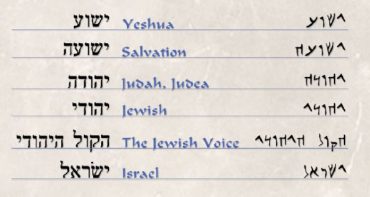
Joseph doesn’t speak their language, he’s dressed differently. He even has another name. So, it is with the Jewish people and Jesus right through the ages. There have been Jewish people who recognized Yeshua as the Messiah yet the majority of them not at all, and He has become alienated from them. When Jewish people look at the Jesus of the church, they say that He’s the God of the Gentiles, He’s not one of us. He’s not one of our brethren, He’s dressed in funny clothes, his ministers are dressed in funny clothes, not our clothes. We don’t recognize Him. He’s speaking another language, He has even got another name, Jesus Christ, instead of Yeshua ha Mashiach.
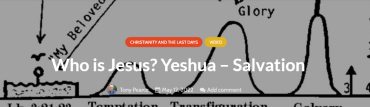
God wants to bring them to the point of recognizing that He is their brother, that Yeshua is their brother. He is a fellow Hebrew, He speaks their language, He’s their brother and He loves them and wants to give them His life so that they can have redemption with God.
And, through a time of trial, He wants to make Himself known to His Jewish brethren, and in this He will fulfil, in a sense like with Joseph, they will come and bow down before Him.
In the Bible, we speak about the time of Jacob’s trouble in Jeremiah 30, Zechariah 12 and, in that time of trouble it says,
10 “And I will pour on the house of David and on the inhabitants of Jerusalem the Spirit of grace and supplication; then they will look on Me whom they pierced. Yes, they will mourn for Him as one mourns for his only son, and grieve for Him as one grieves for a firstborn. 11 In that day there shall be a great mourning in Jerusalem, like the mourning at Hadad Rimmon in the plain of Megiddo. 12 And the land shall mourn, every family by itself: the family of the house of David by itself, and their wives by themselves; the family of the house of Nathan by itself, and their wives by themselves; 13 the family of the house of Levi by itself, and their wives by themselves; the family of Shimei by itself, and their wives by themselves; 14 all the families that remain, every family by itself, and their wives by themselves. Zechariah 12.10-14
God will pour out His Spirit upon the house of Israel. They will look upon Him whom they have pierced and mourn for Him as for an only son. So, in the time of trouble, they look to Yeshua the Messiah and I think there’s a great parallel between that and Joseph’s brothers here. They too, through their time of trouble, look to him and they recognize that he is their brother as he reveals himself to them.
But there has to be a repentance before they can be reconciled to him and that’s why as Zechariah speaks about the Spirit being poured out on them, it then says in the next chapter (Chapter 13) there will be a fountain for the cleansing for sin and uncleanness.
“In that day a fountain shall be opened for the house of David and for the inhabitants of Jerusalem, for sin and for uncleanness. Zechariah 13.1
The blood of Jesus cleanses us from all sin, and for all of us, whether we’re Jewish or Gentile to be reconciled to God, we have to come through the blood of Yeshua Jesus the Messiah to have a relationship with God, for those who are alienated from God to come into the presence of God, to love God, and to know God. And it points forward to Yeshua, the One who brings reconciliation with God. Corinthians chap 5.14 says,
14 For the love of Christ compels us, because we judge thus: that if One died for all, then all died; 15 and He died for all, that those who live should live no longer for themselves, but for Him who died for them and rose again. 16 Therefore, from now on, we regard no one according to the flesh. Even though we have known Christ according to the flesh, yet now we know Him thus no longer. 17 Therefore, if anyone is in Christ [Messiah], he is a new creation; old things have passed away; behold, all things have become new. 18 Now all things are of God, who has reconciled us to Himself through Jesus Christ [Yeshua ha Mashiach], and has given us the ministry of reconciliation, 19 that is, that God was in Christ [Messiah] reconciling the world to Himself, not imputing their trespasses to them, and has committed to us the word of reconciliation. 20 Now then, we are ambassadors for Christ, as though God were pleading through us: we implore you on Christ [Messiah]’s behalf, be reconciled to God. 21 For He made Him who knew no sin to be sin for us, that we might become the righteousness of God in Him. 2 Corinthians 5.14-15
Praise the Lord! The Messiah, son of Joseph, the suffering servant of Isaiah 53 who is despised and rejected of men,
3 He is despised and rejected by men,
A Man of sorrows and acquainted with grief.
And we hid, as it were, our faces from Him;
He was despised, and we did not esteem Him.4 Surely He has borne our griefs
And carried our sorrows;
Yet we esteemed Him stricken,
Smitten by God, and afflicted.
5 But He was wounded for our transgressions,
He was bruised for our iniquities;
The chastisement for our peace was upon Him,
And by His stripes we are healed.
6 All we like sheep have gone astray;
We have turned, every one, to his own way;
And the Lord has laid on Him the iniquity of us all. Isaiah 53.3-6
Maybe some of us have thought about our situation just as Jacob said ‘All things are against Me’. Maybe there are many people out there in the world who are saying ‘all things are against me‘, but whatever is against you in the world, if you come to Yeshua, then God is for you. And, if God be for you, who can be against you?

Believe on Yeshua Jesus the Messiah, be reconciled to God, be reconciled to one another, repent, believe, and receive through the blood of Yeshua, the forgiveness, cleansing, and reconciliation with God which we all need, amen.