
37 “O Jerusalem, Jerusalem, the one who kills the prophets and stones those who are sent to her! How often I wanted to gather your children together, as a hen gathers her chicks under her wings, but you were not willing! 38 See! Your house is left to you desolate; 39 for I say to you, you shall see Me no more till you say, ‘Blessed is He who comes in the name of the Lord!’ ” Matthew 23.37-39
And, in the next verse, in Luke chapter 21, He says something similar. He says in verse 23.
For there will be great distress in the land and wrath upon this people. 24 And they will fall by the edge of the sword, and be led away captive into all nations. And Jerusalem will be trampled by Gentiles until the times of the Gentiles are fulfilled. Luke 21:23-24
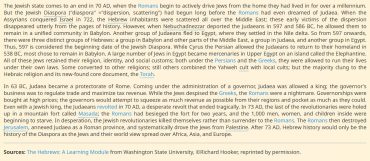
Again, you have that word ‘until’. It’s going to be a time of wrath, of desolation, of dispersion, of the Israelites being led away captive into all nations. It speaks of the dispersion of the Jewish people to the nations which has happened in our time. We’ve seen the Jewish people spread to East and West, North and South into all nations.
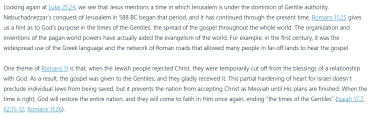
And Jesus says, Jerusalem is going to be trampled or ruled by the Gentiles until the times of the Gentiles are fulfilled.
So, there’s going to be a time when God is going to reverse this process, bring the Jewish people back to the land, bring them back to the Lord, and bring Jerusalem back under the control of the Lord.
It’s not there yet by the way, but it’s on its way.
Note the use of the word ‘until’ implies a preservation of the Jewish people until the time of the end when God will begin to reveal Yeshua to them. And that is in the context of the Second Coming of Jesus.
Now, during this time, Israel is going to be without these things. You’ve got three couplets
4 For the children of Israel shall abide many days without king or prince, without sacrifice or sacred pillar, without ephod or teraphim. 5 Afterward the children of Israel shall return and seek the Lord their God and David their king. They shall fear the Lord and His goodness in the latter days. Hosea 3:3-5
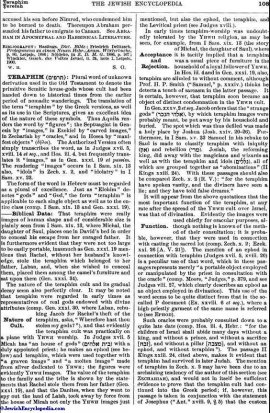
They’re going to be without Me, the מֶלֶךְ [melek] King or שָׂ֔ר [śār] Prince, the king of God’s appointment. There could still be a prince of their own choice of course.
They’re going to be without the זֶ֖בַח [zebaḥ] and the מַצֵּבָ֑ה [maṣṣēbâ], the sacrifice and the standing pillar. The sacrifice is the sacrifice appointed by God primarily for the covering sin, for atonement, and the standing pillar is used for idolatrous worship of other gods.
They’re going to be without the אֵפ֖וֹד [ʾēpôd] ephod and without the וּתְרָפִֽים [ûtǝrāpîm] teraphim. The ephod on the high priest garment is for discerning of the will of God, and the teraphim are the pagan idols which are used to speaking with oracles which are used by the heathen to try and discern the will of God.
We have got three couplets. In each of them, there is one part which is positive and one which is negative. You see that. And that is the condition how Israel is going to exist during this time whereby you have the positive and the negative.
Now, if you think about it, all the positive things are going to be fulfilled in Yeshua and we’ll see how Jesus actually fulfils the positive side of what God is offering. The negative elements apply to what it means to go away from God through worshiping idols.
For the most part, what the Bible and what history shows us is that, during the time of the dispersion, Jewish people, for the most part, have not come to believe in Jesus. And, for the most part, also have not gone into the kind of idolatry which was prevalent at the time of Hosea.
So, let’s have a look at bit more at what we can learn about these things.
מֶלֶךְ [melek] King or שָׂ֔ר [śār] Prince:
The melek is the King of God’s appointment. If you go into the Book of Kings, you see that there are Kings who are of the line of David, who are appointed by God and are legitimate and we are told also that the the Messiah is going to come out of the line of David. So, there’s a connection between the Kings of the line of David and the coming of the Messiah.

The Word שָׂ֔ר [śār] means prince. It’s not always negative. Actually, it’s used in Isaiah chapter 9: 6 of the Messiah being the שַׂר שָׁלוֹם [śar šālôm] the Prince of Peace. But it also has the idea of assar the prince who is of your own choice a prince who is not set up by God and though it can be positive, here it implies a negative, a ruler not chosen in the will of God as was the case in all the kings of the northern kingdom who were not put in place by will of God and were illegitimate in the eyes of the Lord.
When we go through Hosea, through his prophecy, in chapter 10, he prophesies the end of the Northern Kings and its Kingdom. The last king of the Samaritan Kingdom was overthrown in 721BC.
3 For now they say,
“We have no king,
Because we did not fear the Lord.
And as for a king, what would he do for us?”
4 They have spoken words,
Swearing falsely in making a covenant.
Thus judgment springs up like hemlock in the furrows of the field.5 The inhabitants of Samaria fear
Because of the calf of Beth Aven.
For its people mourn for it,
And its priests shriek for it—
Because its glory has departed from it.
6 The idol also shall be carried to Assyria
As a present for King Jareb.
Ephraim shall receive shame,
And Israel shall be ashamed of his own counsel. Hosea 10:3-6
Jeremiah also prophesies the end of the Kings of Judah some 150 years later.
Jeremiah 22: 28-29 the southern Kingdom of Judah had the legitimate Kings of the line of David who were appointed by God, but they were also going to be removed because of their unfaithfulness to God.
24 “As I live,” says the Lord, “though Coniah the son of Jehoiakim, king of Judah, were the signet on My right hand, yet I would pluck you off; 25 and I will give you into the hand of those who seek your life, and into the hand of those whose face you fear—the hand of Nebuchadnezzar king of Babylon and the hand of the Chaldeans. 26 So I will cast you out, and your mother who bore you, into another country where you were not born; and there you shall die. 27 But to the land to which they desire to return, there they shall not return.
28 “Is this man Coniah a despised, broken idol—
A vessel in which is no pleasure?
Why are they cast out, he and his descendants,
And cast into a land which they do not know?
29 O earth, earth, earth,
Hear the word of the Lord!
30 Thus says the Lord:
‘Write this man down as childless,
A man who shall not prosper in his days;
For none of his descendants shall prosper,
Sitting on the throne of David,
And ruling anymore in Judah.’ ” Jeremiah 22:24-30
And Judah too would be overthrown and taken into captivity in Babylon but would return from Babylon again to restore the Kingdom in one sense, but not with the King.
So that the Jewish people will be back in the land in preparation for the coming of the King of kings who is Yeshua / Jesus the Messiah. But basically, the end of the line of David would happen.
This is also prophesied in the Book of Ezekiel. Go to Ezekiel chapter 21: 24-27. It’s the prophecy concerning the end of the line of David.
24 “Therefore thus says the Lord God: ‘Because you have made your iniquity to be remembered, in that your transgressions are uncovered, so that in all your doings your sins appear—because you have come to remembrance, you shall be taken in hand.
25 ‘Now to you, O profane, wicked prince of Israel, whose day has come, whose iniquity shall end, 26 thus says the Lord God:
“Remove the turban, and take off the crown;
Nothing shall remain the same.
Exalt the humble, and humble the exalted.
27 Overthrown, overthrown,
I will make it overthrown!
It shall be no longer,
Until He comes whose right it is,
And I will give it to Him.”’ Ezekiel 21:24-27
There is a prophecy speaking about the end of the line of the Kings of Israel. They’ll be taken the diadem. The crown will be taken off their head, the high ones will be abased and the low ones will be exalted. God will create a process of overturning.
I will overturn (overthrow עַוָּה [ʿawwâ]) overturn overturn.
You can see that happens in the histories of the people of Israel. And it says that Judah will be overturned until He come whose right it is, and I will give it to Him.
So, there’s an interesting question. Who is the He who is coming, whose right it is? When you look in Hebrew text, the Hebrew word for He whose right it is is אֲשֶׁר הַמִּשְׁפָּט לוֹ [ʾăšer hammišpāṭ lô] which has a connection to the title Shiloh, which is one of the titles of the Messiah.
So, he saying, there’s going to be this overturning until the one comes who has the right to it, who is actually the Messiah, who’s going to be Yeshua / Jesus (Salvation) the Messiah.
Therefore, this is the Shiloh picture of the Messiah going back to the prophecy in the Book of Genesis chapter 49,
10 The sceptre shall not depart from Judah,
Nor a lawgiver from between his feet,
Until Shiloh comes;
And to Him shall be the obedience of the people. Genesis 49:10
Shiloh is a picture of the Messiah, and this is saying there going to be an overturning of the Kings of Israel, of the kings of Judah until the coming of the Messiah. And, when the Messiah comes, He is going to have the right to the Kingdom. So, Yeshua / Jesus is the One who has the right to be King.
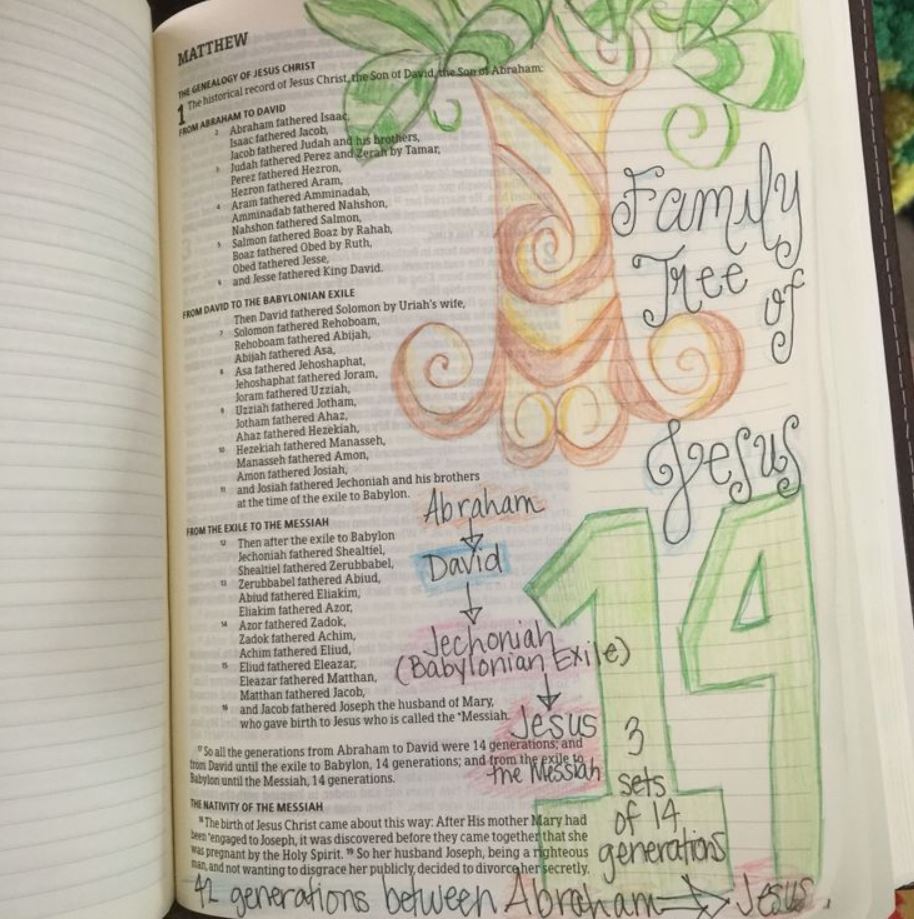
And you see that when you come to the New Testament. The first two chapters of the New Testament are about the birth of Jesus. You have the wise men coming to Herod
Now after Jesus was born in Bethlehem of Judea in the days of Herod the king, behold, wise men from the East came to Jerusalem, 2 saying, “Where is He who has been born King of the Jews? For we have seen His star in the East and have come to worship Him.”
3 When Herod the king heard this, he was troubled, and all Jerusalem with him. 4 And when he had gathered all the chief priests and scribes of the people together, he inquired of them where the Christ was to be born.
5 So they said to him, “In Bethlehem of Judea, for thus it is written by the prophet:
6 ‘But you, Bethlehem, in the land of Judah,
Are not the least among the rulers of Judah;
For out of you shall come a Ruler
Who will shepherd My people Israel.’” Matthew 2:1-6
Somehow, they understand that this One who’s coming is the King of the Jews. How did they get that information? I guess only God could give it to them.
We have Jesus before the Pontius Pilate in Matthew 27:
11 Now Jesus stood before the governor. And the governor asked Him, saying, “Are You the King of the Jews?”
Jesus said to him, “It is as you say.” Matthew 27:11
And, as a result, Pilate puts this title on the Cross, over His head as the accusation written against Him. This is Jesus, the King of the Jews.
It is a strange kind of King who gets up on a Cross. But that’s also part of the story. Jesus would come as the King of the Jews and be rejected the first time, and end up on the Cross in order that He might be the Redeemer to redeem us from our sins.
We see that, although He was despised and rejected, there were also those who believed in Him and who followed Him.
In the account of the triumphal entry we have in Matthew’s and John’s gospels, it says,
12 The next day a great multitude that had come to the feast, when they heard that Jesus was coming to Jerusalem, 13 took branches of palm trees and went out to meet Him, and cried out:
“Hosanna!
‘Blessed is He who comes in the name of the Lord!’
The King of Israel!”14 Then Jesus, when He had found a young donkey, sat on it; as it is written:
15 “Fear not, daughter of Zion;
Behold, your King is coming,
Sitting on a donkey’s colt.”16 His disciples did not understand these things at first; but when Jesus was glorified, then they remembered that these things were written about Him and that they had done these things to Him. John 12:12-16
So, as Jesus rode into Jerusalem, you had a great crowd of people who were believing in Him and following Him. Not all the Jews rejected Jesus. Many Jews believed in Jesus. You can see that in the account, and they held Him as the Messiah and said ‘Blessed is He who comes in the name of the Lord‘. That’s the greeting for the coming of the Messiah
And they called him the King of Israel. So Jesus was coming as the King to His people. We read in Luke’s Gospel that, when this happened, the Pharisees said to Jesus rebuke your disciples when they heard these words because they recognized they were the greeting for the coming of the Messiah.
What did Jesus say? If they were silent, the very stones themselves would cry out. Because Jesus is is the Messiah, and He was coming into Jerusalem as the Messiah, and as the rightful King of Israel only to be despised and rejected and go to the Cross.
37 Then, as He was now drawing near the descent of the Mount of Olives, the whole multitude of the disciples began to rejoice and praise God with a loud voice for all the mighty works they had seen, 38 saying:
“ ‘Blessed is the King who comes in the name of the Lord!’
Peace in heaven and glory in the highest!”39 And some of the Pharisees called to Him from the crowd, “Teacher, rebuke Your disciples.”
40 But He answered and said to them, “I tell you that if these should keep silent, the stones would immediately cry out.” Luke 19:37-40
He was rejected in fulfilment of the prophecy of Isaiah 53, and He would be crucified to die as a sacrifice for the sin of the world. But, as we’ve seen already in the passage in Matthew’s Gospel, He is going to return again. And then, He will be greeted with that same greeting ‘Blessed is He who comes in the name of the Lord‘ as the people of Israel look to Jesus as the coming Messiah.
What does this say about Israel’s present condition? Israel, after Jesus has come and Jesus says your house has left you desolate, the Temple was first spiritually, then physically desolate and the Jewish people were scattered throughout the nations, Jerusalem was trodden down by the Gentiles and the dispersion to the nations in bondage to Gentile kings. There is currently no King of the line of David in power and, in fact, no King of the line of David can come because the genealogical records have been destroyed and lost and there’s no one who can prove that they are of the line of David.
There is no tribe of Judah, nor is there a separate Davidic family. So, Israel is without King or prince in the dispersion.
And today, even as Israel is back in the land, they still don’t have a King. They have a prime minister and a president, but they don’t really qualify as the מֶלֶךְ [melek] King or even the שָׂ֔ר [śār] according to the scriptures. They are not permanent.
But there’s a time coming according to scripture when the King will come, when the Kingdom will be restored to Israel.
Jesus spoke about that in Acts chapter 1 and he will restore the Kingdom to Israel and He will come as the King of kings and the King of Israel.
4 And being assembled together with them, He commanded them not to depart from Jerusalem, but to wait for the Promise of the Father, “which,” He said, “you have heard from Me; 5 for John truly baptized with water, but you shall be baptized with the Holy Spirit not many days from now.” 6 Therefore, when they had come together, they asked Him, saying, “Lord, will You at this time restore the kingdom to Israel?” 7 And He said to them, “It is not for you to know times or seasons which the Father has put in His own authority. 8 But you shall receive power when the Holy Spirit has come upon you; and you shall be witnesses to Me in Jerusalem, and in all Judea and Samaria, and to the end of the earth.” Acts 1:4-8
He is the One who has the right to be the King. Therefore, the answer to Israel being without a King is that, unless you have Jesus, you don’t have the rightful King. But, if you have Jesus, you do have the rightful King.