
I take a ‘dispensational interpretation’ of the Bible which is a method of interpreting history that divides God’s work and His purposes towards mankind into different periods of time in which there are different administrations according to His will.
Tony Pearce
I want to give a talk today on the subject of dispensations in the Bible. If you don’t know what that is, hopefully you will by the time I’ve finished.
I make no apologies for the fact that I take a ‘dispensational interpretation’ of the Bible which is a method of interpreting history that divides God’s work and His purposes towards mankind into different periods of time in which there are different administrations according to the will of God.
If you understand this, you can understand a lot of things about the Bible, particularly about the creation story:
- that there really was a six-day creation in which God created the heavens and the earth,
- that there was a fall in which humans lost the ability to connect to God,
- there was an expulsion from Eden, a fall which caused the world to be less than the perfect world which God created.
And a whole lot of things which fall into place once you understand this system of interpreting the Bible, including:
- the great ages of the Patriarchs before the Flood,
- the the fact that Israel is chosen by God and remains a people before God until the end of time, until the return of the Messiah,
- and the reasons why we don’t have to circumcise our boys if we are Christians,
- and we don’t have to keep kosher or to keep the Sabbath laws. You can keep them if you want to, but you’re not compelled to.
So, these things fit in with the subject of dispensationalism and this thought came to me when we were doing the Bible study the other day on Ephesians and and we read this passage in Ephesians Chapter 1. So let’s read this and see what it can tell us. Ephesians Chapter 1 from verse 3:
3 Blessed be the God and Father of our Lord Jesus Christ, who has blessed us with every spiritual blessing in the heavenly places in Christ, 4 just as He chose us in Him before the foundation of the world, that we should be holy and without blame before Him in love, 5 having predestined us to adoption as sons by Jesus Christ to Himself, according to the good pleasure of His will, 6 to the praise of the glory of His grace, by which He made us accepted in the Beloved.
7 In Him we have redemption through His blood, the forgiveness of sins, according to the riches of His grace 8 which He made to abound toward us in all wisdom and prudence, 9 having made known to us the mystery of His will, according to His good pleasure which He purposed in Himself, 10 that in the dispensation of the fullness of the times He might gather together in one all things in Christ, both which are in heaven and which are on earth—in Him. 11 In Him also we have obtained an inheritance, being predestined according to the purpose of Him who works all things according to the counsel of His will, 12 that we who first trusted in Christ should be to the praise of His glory.
13 In Him you also trusted, after you heard the word of truth, the gospel of your salvation; in whom also, having believed, you were sealed with the Holy Spirit of promise, 14 who is the guarantee of our inheritance until the redemption of the purchased possession, to the praise of His glory. Ephesians 1:3-14
Isn’t that a wonderful passage? In Paul’s writings, he lists some of the great things which we have in Jesus Christ, what we have received through Him, and His purpose in giving this.
The beginning of his letter in Ephesians is meant to strengthen our faith and to make us truly trust in Jesus for all that He has to give to us. It mentions here a number of things:
- every spiritual blessing in the heavenly places, that we’re seated with Christ in Heavenly places far above all principalities and rulers, so we have a position in Christ. We have been raised up from the being under the power of darkness into being above him through faith in Jesus Christ
- just as He chose us in Him before the foundation of the world,
- that we should be holy and without blame before Him in love, so that we’re chosen by Christ to be a new people in Him, to be without blame, to be holy and to walk before Him in love
- having predestined us to adoption as sons by Jesus Christ to Himself, according to the good pleasure of His will, we’re adopted into his family, the family of God which we enter into through faith in Jesus and, having come into that family, we have all the privileges of sons and daughters of the living God.
- In Him we have redemption through His blood, the forgiveness of sins, according to the riches of His grace, we’re redeemed through his precious blood. We’ve just been remembering the Lord through the breaking of bread and the cup, but by the redemption through the blood, we’ve been brought back from the slave market into a new relationship ship with God through faith in Jesus. And that redemption means that our sins are forgiven, that they’re cancelled, and that we have a freedom to approach God as people who are redeemed through the blood of Jesus
- having made known to us the mystery of His will, according to His good pleasure which He purposed in Himself, and we have the mystery of His will which was made known and through the Word of God, through the Holy Spirit, an inheritance which is obtained and sealed by the Holy Spirit and, if it’s sealed by the Holy Spirit
- In Him also we have obtained an inheritance, being predestined according to the purpose of Him who works all things according to the counsel of His will, that we who first trusted in Christ should be to the praise of His glory, that means that is there’s a deposit in your life through faith in Jesus which you’re going to inherit when you come to go to be with the Lord and you receive that eternal life which is a secure deposit which has been made through the blood of Jesus into your life.
And all those things are a subject of talk of their own. But today, I want to talk particularly about the subject of the dispensation of the fullness of the times.
Paul says here:
10 that in the dispensation of the fullness of the times He might gather together in one all things in Christ, both which are in heaven and which are on earth—in Him. Ephesians 1:10
And he goes on, in Chapter 3, to speak about
2 … the dispensation of the grace of God which was given to me for you, 3 how that by revelation He made known to me the mystery (as I have briefly written already, 4 by which, when you read, you may understand my knowledge in the mystery of Christ), 5 which in other ages was not made known to the sons of men, as it has now been revealed by the Spirit to His holy apostles and prophets: 6 that the Gentiles should be fellow heirs, of the same body, and partakers of His promise in Christ through the gospel, 7 of which I became a minister according to the gift of the grace of God given to me by the effective working of His power. Ephesians 3:2-7
What does this mean? What does the word ‘dispensation’ mean? Paul is explaining here a change in the dispensation which has happened as a result of the coming of Jesus Christ.
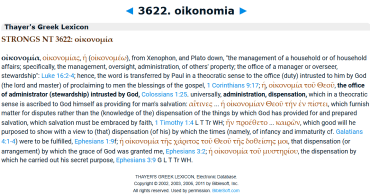
If you look at the subject of the dispensations in the Bible, what they mean, the original word which is used in the passage here in Ephesians is οἰκονομίαν [oikonomian], a Greek word which literally means ‘house rules’. It means house nomos means rules.
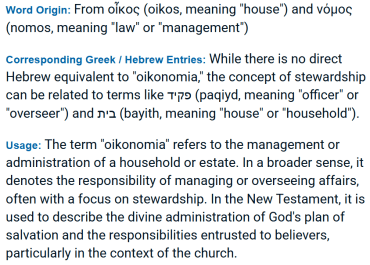
So, he’s speaking here about the way in which God is goingto administer His rule in the house of God, in the people who come to be adopted into the family, and who are His people during the time in which Paul is speaking.
Some translations call it ‘stewardship’. Now, these are rules by which God administers His Grace, His favour to those who have been adopted into His household.
If you study the Bible, you can see that there is a change which takes place from one dispensation and from one age to another. Now, the basic principles about God don’t change. God remains Holy, God remains righteous, God remains unchanging. Additionally, the problem which humans have in their relationship with God doesn’t change either. We are sinners, we fall short of the Glory of God, and there is a break in the relationship between the Holy God and sinful humanity.
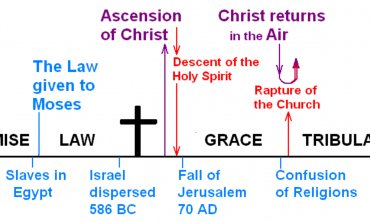
In each one of the dispensations, God is dealing with that problem and to bring about His order into the world. And the way that God deals with this problem and how it affects God’s relationship with His people does change with the changing dispensations.